
cryptopunks, squiggles, and the moment internet culture joined MoMA.
why survival, not hype, is now the test of cultural legitimacy.

TL;DR CryptoPunks and Chromie Squiggles entering MoMA is not about NFTs. It marks the moment internet culture proved it could survive long enough to be remembered.
The Framing Mistake People Make
Most reactions frame this as a museum finally, belatedly, accepting of NFTs.
That framing misunderstands how culture works.
Museums do not validate formats. They validate historical significance. MoMA did not acquire these works because they are NFTs. It acquired them because they solved long standing artistic problems using a new medium, at a moment when digital culture itself was struggling to preserve meaning.
This was not inevitable. It was a judgement call.
At some point, curators chose to treat these works not as technical curiosities, but as artefacts future audiences would need in order to understand how culture behaved in the early twenty first century.
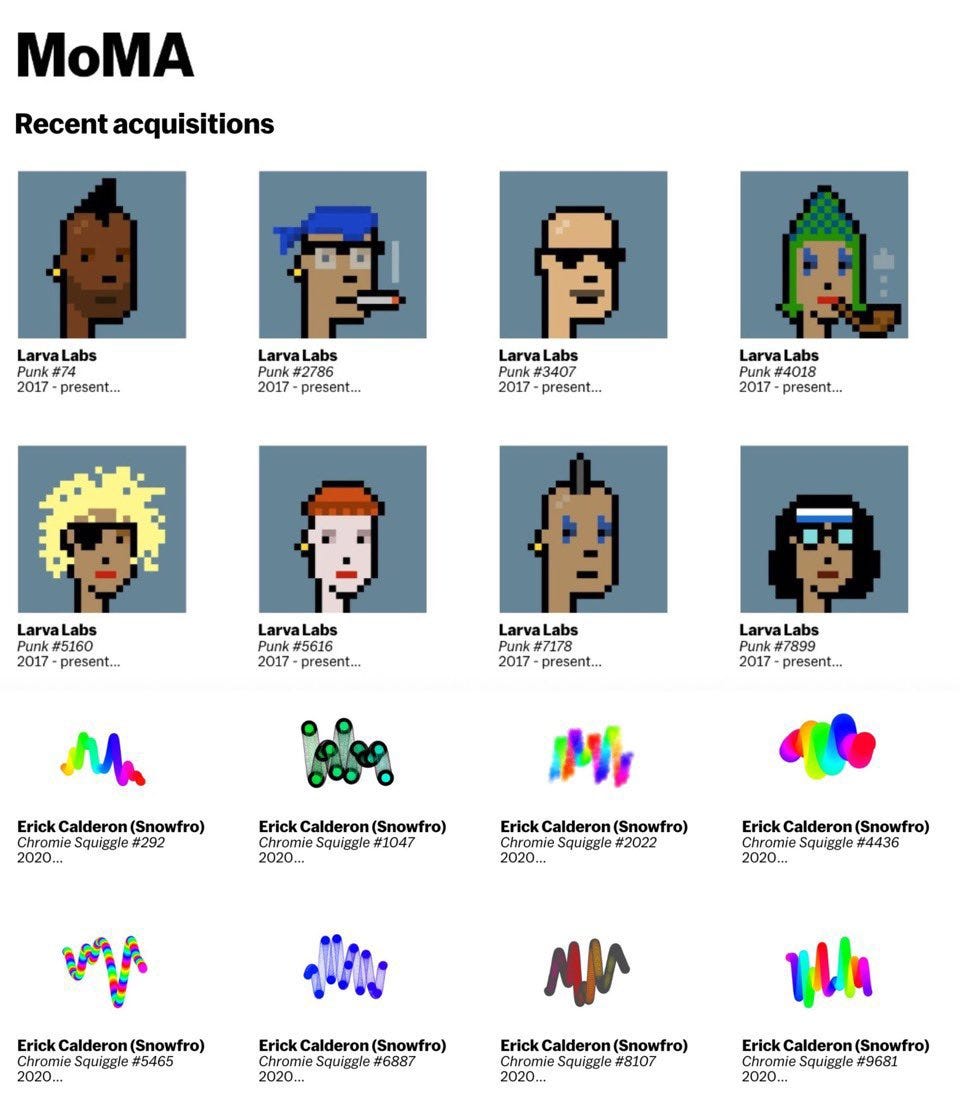
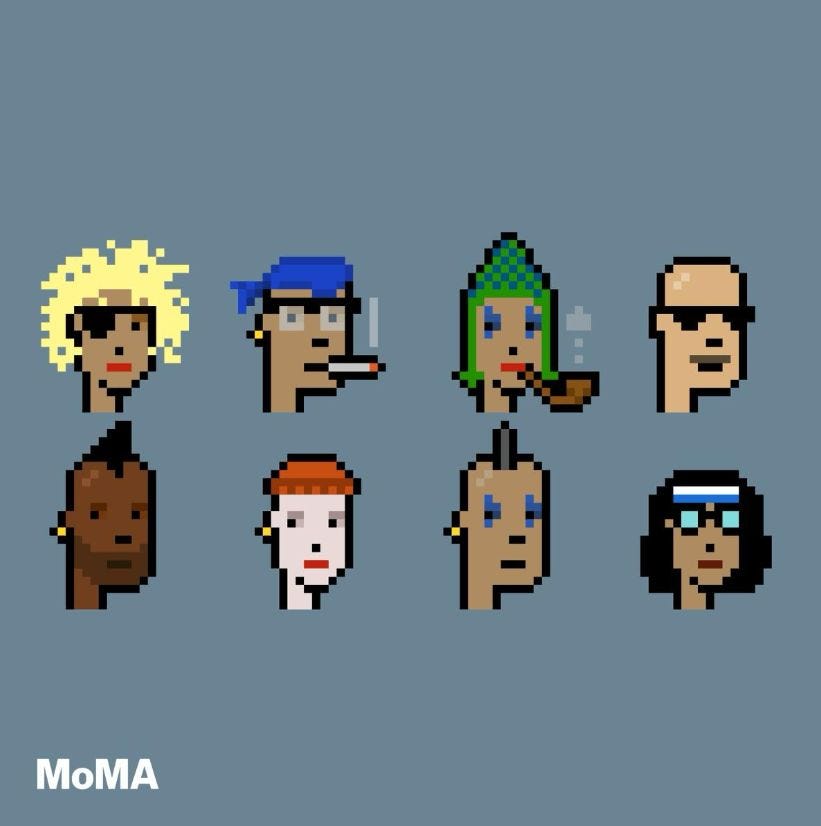
Canon always begins with a human decision and The Museum of Modern Art has added eight CryptoPunks and eight Chromie Squiggles NFTs to its permanent collection, housed in its Media and Performance department.
MoMA Is Not Neutral Here
There is a second, quieter move happening.
By acquiring CryptoPunks and Chromie Squiggles, MoMA is not just recognising internet native culture. It is protecting its own authority.
Canon now often forms online first, socially and structurally, before institutions arrive. MoMA’s acquisition is an assertion that while culture may be born on the internet, institutions still decide what gets remembered.
This is not passive archiving.
It is a strategic act of relevance.
The CryptoPunks entering the collection are #74, #2786, #3407, #4018, #5160, #5616, #7178, and #7899. Larva Labs founders Matt Hall and John Watkinson donated Punks #74 and #5160. Other contributors included Mara and Erick Calderon (CryptoPunk #2786), Rhydon and Caroline Lee (#3407), Ryan Zurrer of 1OF1 AG (#4018), judithESSS (#5616), the Tomaino Family (#7178), and the Cozomo de’ Medici Collection (#7899).
The Idea This Moment Kills
This acquisition rejects a dominant assumption of the platform era. Ephemerality as default.
Feeds refresh. Trends expire. Virality replaces endurance. Most internet native work is designed to travel fast, not last.
CryptoPunks and Squiggles resist this logic. They were built to persist, to remain legible without platforms, and to survive outside the contexts that made them visible.
This is not museums embracing the internet.
It is museums rejecting the idea that the internet must forget itself.
Why These Two And Not The Rest
CryptoPunks and Squiggles passed filters most NFT projects failed.
They introduced formal innovation rather than narrative branding.
They influenced how others built systems, not just how others marketed.
They have transcended founders, roadmaps, or constant community management.
They are ‘just’ art.
They remain as they are when stripped of Discords, hype cycles, and price action.
Between 2021 and 2024, thousands of NFT collections launched. The majority collapsed, went dormant, or lost relevance in rapid succession. These two did not.
Most NFT projects were more like short term momentum driven campaigns.
These were structures.
CryptoPunks As Digital Portraiture
CryptoPunks look crude. That is a historical feature, not a flaw.
Every medium begins with reduction. Early photography, early video art, and early digital graphics were dismissed as primitive before becoming foundational.
CryptoPunks solve a specific problem. How to represent identity, authorship, and scarcity in a world where copying is infinite.
Their power is structural, not aesthetic. Fixed supply, immutable provenance, and extreme visual simplicity turned them into the first widely recognised form of network native portraiture.
Created in 2017, they entered MoMA’s orbit less than a decade later. That compression is not hype. It is a new condition of culture.
Squiggles And The Canonisation Of Code
Chromie Squiggles fit even more cleanly into art history.
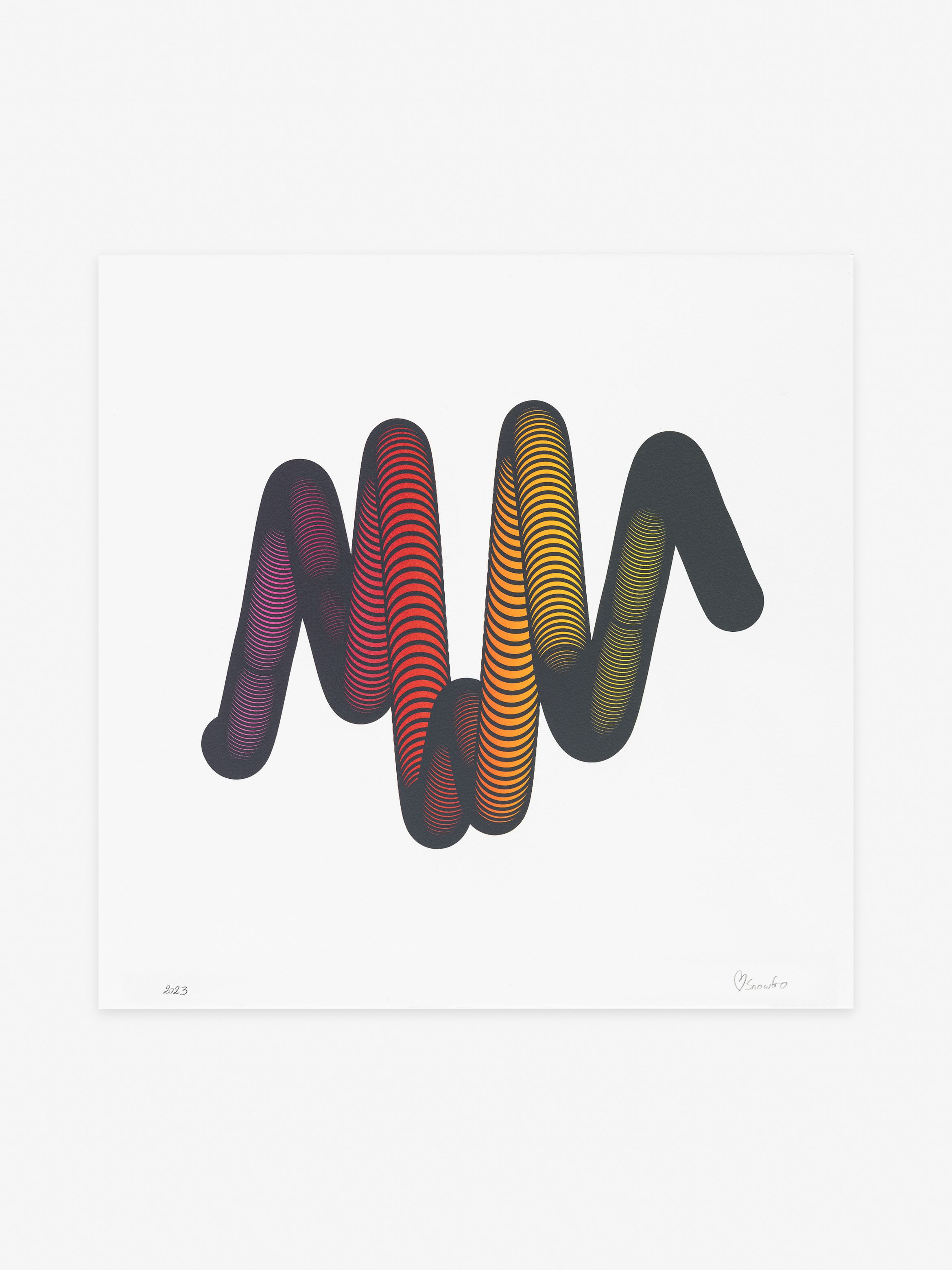
They sit in a lineage of instruction based and algorithmic practices where the artwork is the execution of a system rather than a single authored image.
The artist (Erick Calderon aka Snowfro) founder of Art Blocks defined the rules. The output is variable. Each result is valid.
They were simple, colourful, blockchain-based flowing lines that became a cornerstone of the generative art movement, demonstrating unique, on-chain digital art creation.
NFT infrastructure solved what generative art lacked for decades. Provenance and authorship at the level of the output itself.
This is not a crypto breakthrough.
It is a curatorial solution.
The Photography Parallel
This mirrors photography’s institutional journey.
The Museum of Modern Art began acquiring photography seriously in the 1930s, decades after the medium’s invention, once it became clear photography was not a novelty but a new way of seeing and recording the world.
The difference now is speed.
Photography took generations to stabilise culturally.
Internet native canon is forming inside a decade.
This creates a new instability. Institutions are forced to canonise before hindsight exists.
The Risk Of Canon Forming Too Soon
This speed introduces a real danger.
Under network conditions, survival can be mistaken for significance. Some works endure because they are structurally meaningful. Others endure because they were early, lucky, or capital rich.
Canon is forming faster than reflection.
This does not invalidate MoMA’s decision, but it exposes a new fragility in cultural memory. The canon may now need revision sooner than we are comfortable admitting.
What Nearly Erased Them
These works survived conditions that erased most of their peers.
They endured speculation, scams, overproduction, and a full market collapse. From peak to trough, NFT market volumes fell by more than ninety percent. Attention vanished. Infrastructure remained.
Their endurance under collapse is the source of their cultural capital.
Culture that only works in bull markets does not make it into museums.
What This Does Not Validate
This moment does not validate NFTs broadly.
It does not legitimise speculation.
It does not retroactively justify the hype cycle.
It does not elevate most internet native work into canon territory.
Canon remains selective. Scarcity of attention still applies.
Both are more like exceptions to the rules than the norm.
Proof Beyond The Art World
The influence has already escaped the gallery.
Avatar logic reshaped gaming skins, fashion drops, and digital identity systems.
Generative logic now appears in branding, product design, interiors, and creative tools.
Provenance thinking underpins luxury authentication, resale, and collectibles.
What began as art infrastructure has become cultural infrastructure.
What Brands Should Learn
Brands should not copy the aesthetics, the tokens, or the surface mechanics.
They should learn the deeper rule. Build systems that remain legible when attention disappears.
If your cultural relevance collapses without constant amplification, it will not survive long enough to matter.
The New Rules Of Cultural Capital
Cultural capital no longer accumulates slowly through institutions.
It is now stress tested in public, under collapse, volatility, and ridicule, and only then selectively archived.
Preservation has become the final form of power.
Cultural capital is not created by attention. It is created by survival.
The future canon will reward systems that endure collapse, not stories that peak in feeds.
CryptoPunks and Squiggles matter because they prove internet culture can outlast its own platforms.
The old argument was whether NFTs were art.
The new argument is unavoidable.
Culture that cannot survive collapse will not be remembered.