
bonsai by brodie neill

Designed as a special commission for a private client by Australian furniture designer and builder Brodie Neill, this is Bonsai.
It’s a sculptural shelving centrepiece with a multi-tiered structure. Seamlessly rising from the ground, each ebb and flow is counterbalanced from a central vertebra.
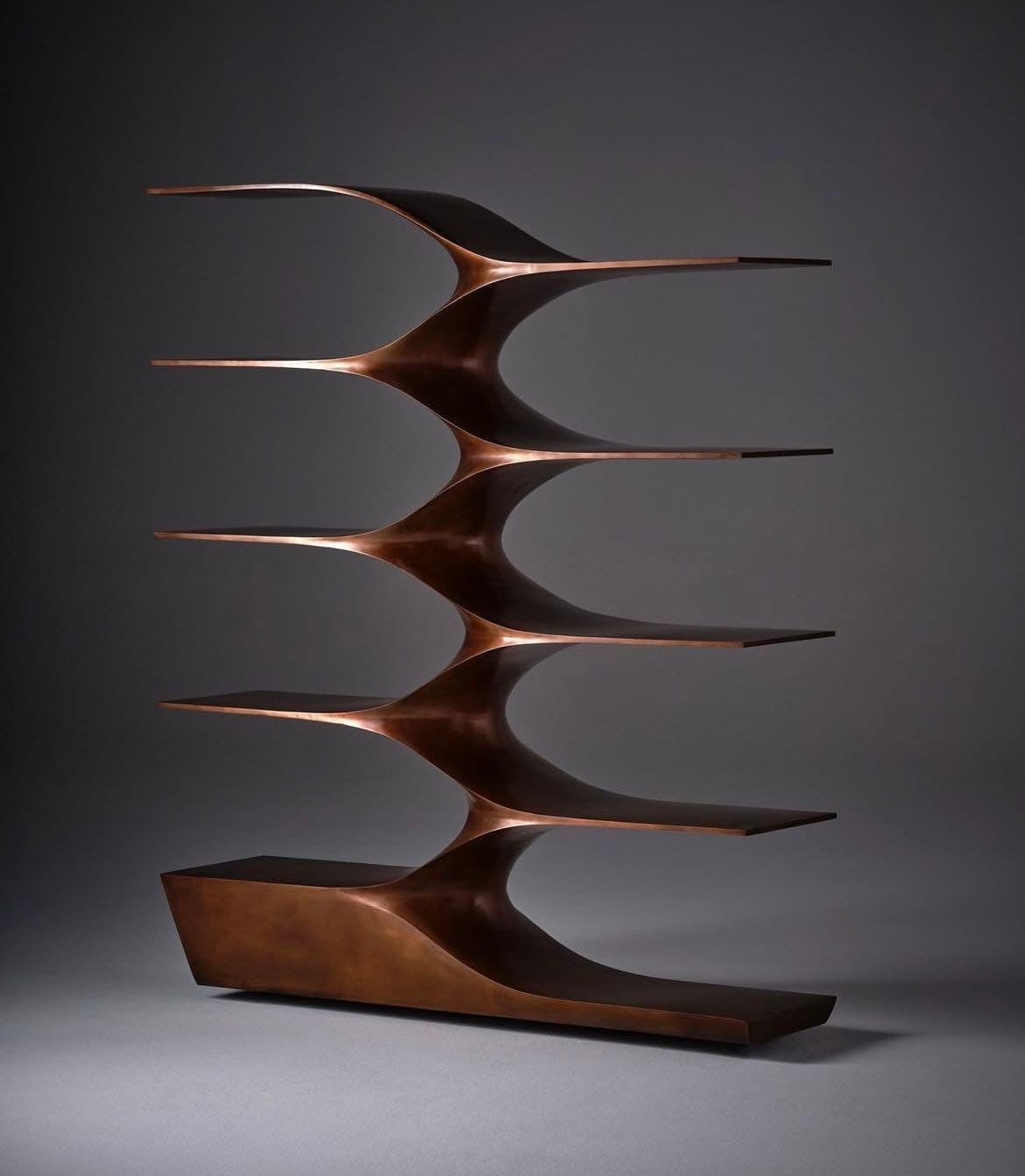
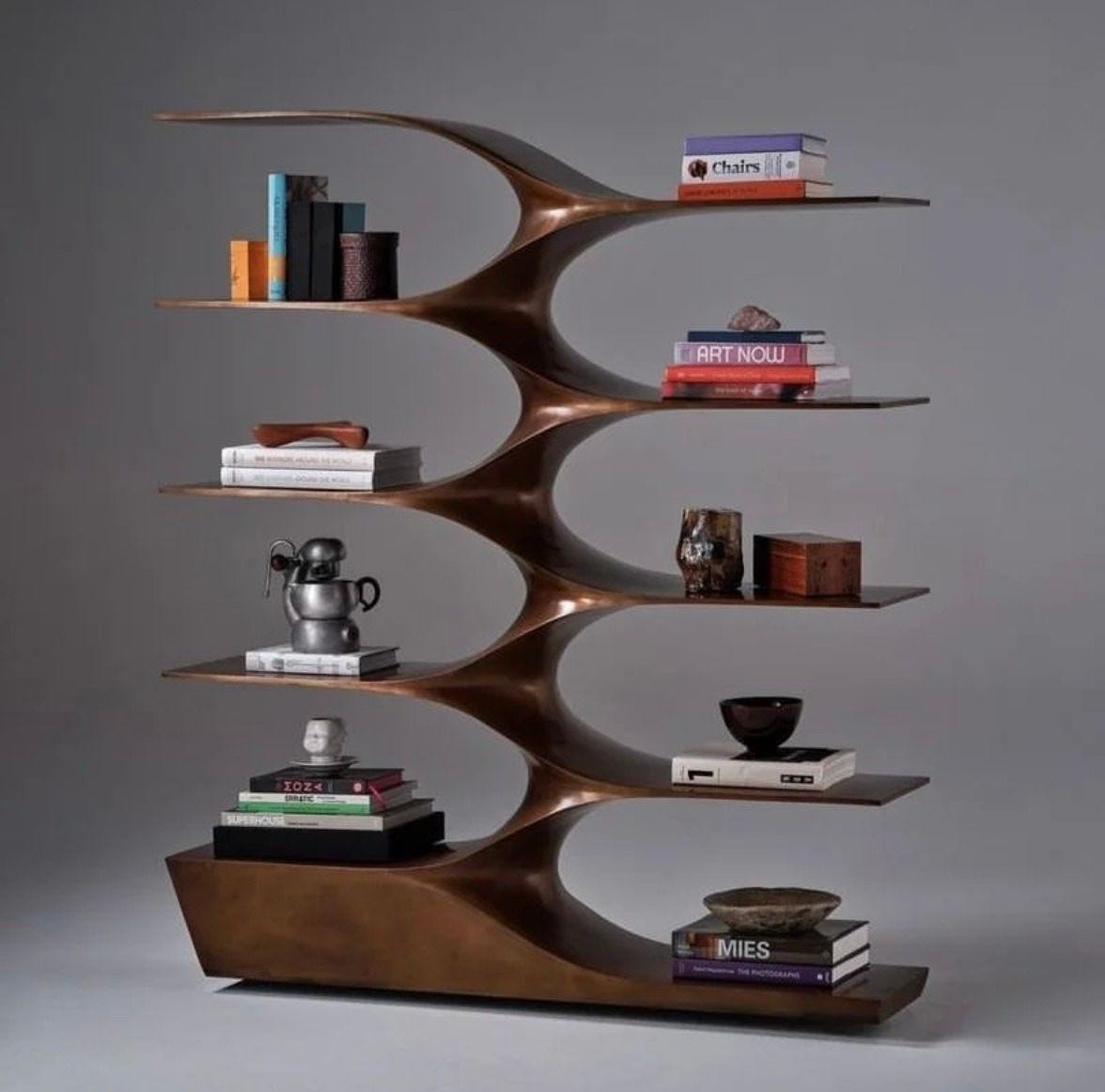
This is furniture that definitely doesn’t want to be in the background. Most shelving is built for function and blending in. This does the opposite. The shelf is the statement, and whatever you place on it becomes secondary. It’s cultural capital personified.
You can immediately sense the labour, the love, the craftsmanship and the engineering that’s gone into it. Everything about it is intentional. And it’s a one of a kind that won’t be available to buy anywhere else. That is classic high-status signalling.
It sits in the lineage of mid-century modernism but pushes past nostalgia. You can see echoes of Eames-era fluency, sculptural modernism, even biomorphism but this is not retro. It borrows the moral authority of modernism while updating it for a world obsessed with singular objects rather than systems.
Culturally, biomorphism carries a specific kind of capital. It signals fluency in design history without shouting it. It implies patience, craft, and an appreciation for natural complexity over industrial efficiency. That is why it often appears in galleries and architect-led interiors rather than mass-market spaces.
This is a shelf designed for curation, not storage. The spacing, the asymmetry, the limited surfaces all impose editorial discipline. You cannot overfill it without just ‘stuff’. That constraint is the point. It rewards curation over accumulation.


Once you place books or objects on this, you are no longer just displaying possessions. You are making a considered decision about what deserves to be seen. It will be endlessly a talking point.
In a world of flat-pack optimisation and feed-driven interiors, this object is genuinely a one of a kind.
And now I can truly appreciate the value put on this over something that can functionally and practically do the same thing, if not better (an IKEA shelf) but will never exude the same sense of joy, wonder and presence every time you look at it.
I suppose that’s really why art, craft and value is so subjective because some might feel nothing when looking at it and others feel everything. Cultural capital to me is not about usefulness but it is about meaning made visible and identity made tangible through the construction of a sense of self.
A useful provocation to end on to ask yourself is not “What does this do?” but “Why does this matter to me?” That question helps me a lot and the answer will steer you in the right direction.